
Most people assume they are getting enough nutrients from their daily meals. The truth is that nutrient deficiencies are far more common than we think. Many adults live with low vitamin D, B12, iron or magnesium without realising it. The symptoms are often subtle, slow to appear and easy to blame on stress or busy routines.
Understanding these hidden signs can help you take action early before they affect your energy, mood and long term health.
What Nutrient Deficiencies Really Mean
Nutrients fuel every function in your body from brain activity to immunity. When levels drop too low for too long, your body starts sending signals. These signals are often gentle at first such as tiredness or headaches. If they are ignored, they can grow into more serious problems.
1. Vitamin D Deficiency: The Invisible Energy Drain
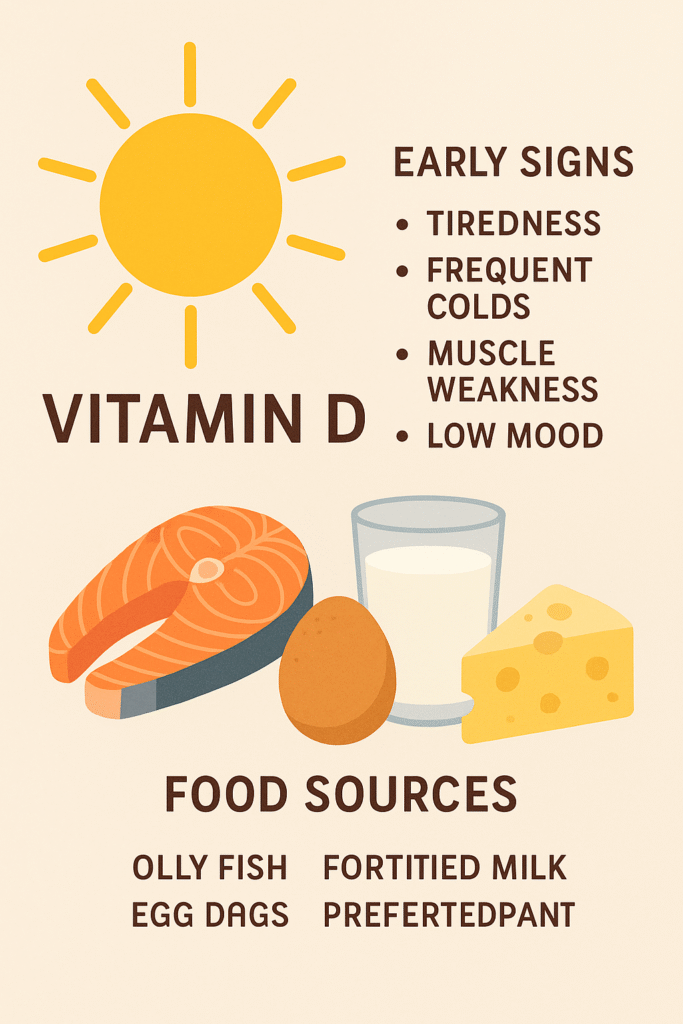
Vitamin D supports immunity, strong bones and a healthy mood. Low levels are extremely common in countries with less sunlight or in people who spend most of their day indoors.
Early Signs
- Feeling tired even after long sleep
- Frequent colds
- Muscle weakness or body aches
- Low mood or irritability
- Slow wound healing
Who Is at Risk
- People with dark skin
- Individuals who spend little time outdoors
- People who cover most of their skin for cultural or personal reasons
- Older adults
- Those with digestive conditions that reduce absorption
Food Sources
- Oily fish
- Egg yolks
- Fortified milk
- Fortified cereals
When to Test
A simple blood test can check your 25 OH vitamin D levels. Many people only discover they are deficient after years of unexplained tiredness.
2. Vitamin B12 Deficiency: The Silent Neurological Problem
B12 keeps your nerves healthy and supports red blood cell production. Low levels can affect memory, mental clarity and mood.
Early Signs
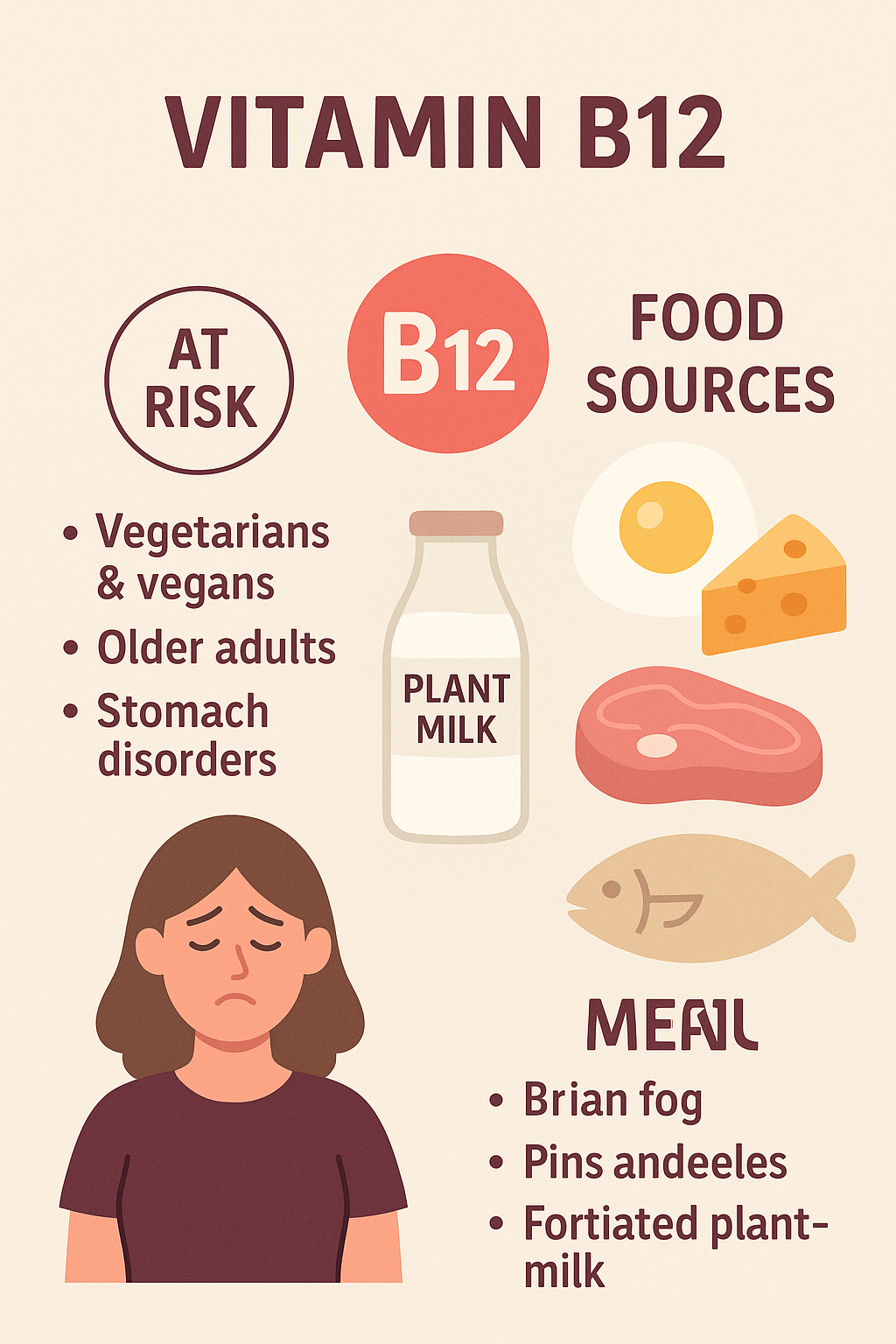
- Brain fog
- Pins and needles in hands or feet
- Breathlessness
- Pale skin
- Weakness and dizziness
- Low appetite
Who Is at Risk
- Vegetarians and vegans
- Older adults
- People taking acid reducing medication
- Individuals with stomach or intestinal disorders
Food Sources
- Meat
- Eggs
- Fish
- Dairy
- Fortified plant based milk
When to Test
If you feel tired, distracted or mentally drained for no clear reason, a B12 test is worth considering.
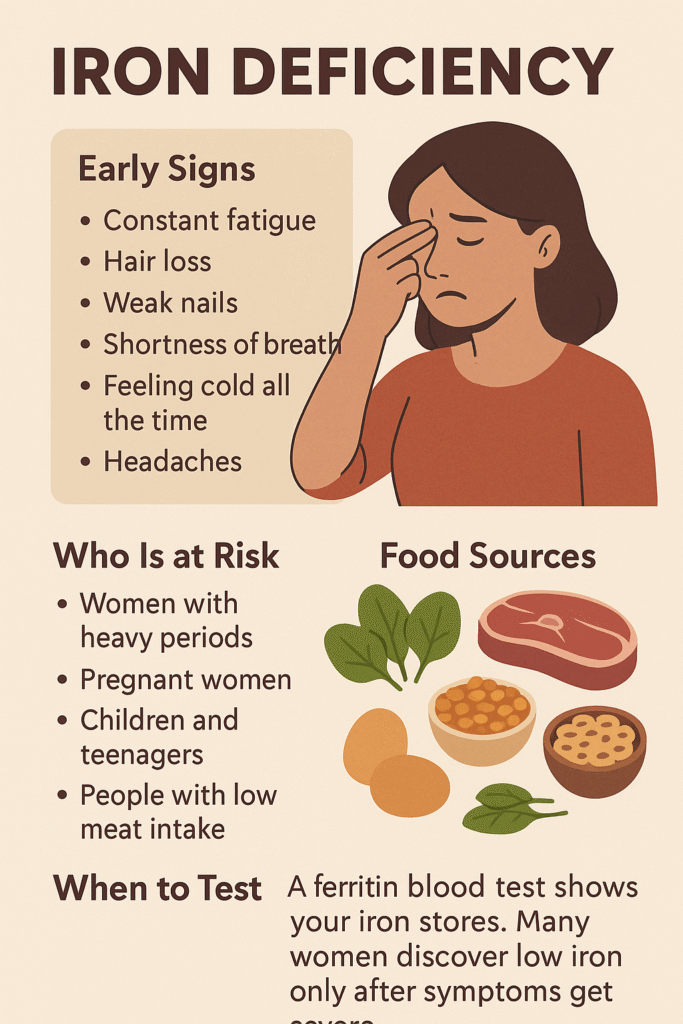
3. Iron Deficiency: The Most Common Yet Overlooked Issue
Iron helps carry oxygen throughout the body. Low iron levels are one of the most common deficiencies worldwide.
Early Signs
- Constant fatigue
- Hair loss
- Weak nails
- Shortness of breath
- Feeling cold all the time
- Headaches
Who Is at Risk
- Women with heavy periods
- Pregnant women
- Children and teenagers
- People with low meat intake
- Individuals with digestive disorders
Food Sources
- Red meat
- Spinach
- Lentils
- Beans
- Pumpkin seeds
- Iron fortified cereals
When to Test
A ferritin blood test shows your iron stores. Many women discover low iron only after symptoms get severe.
4. Magnesium Deficiency: The Stress Sensitive Mineral
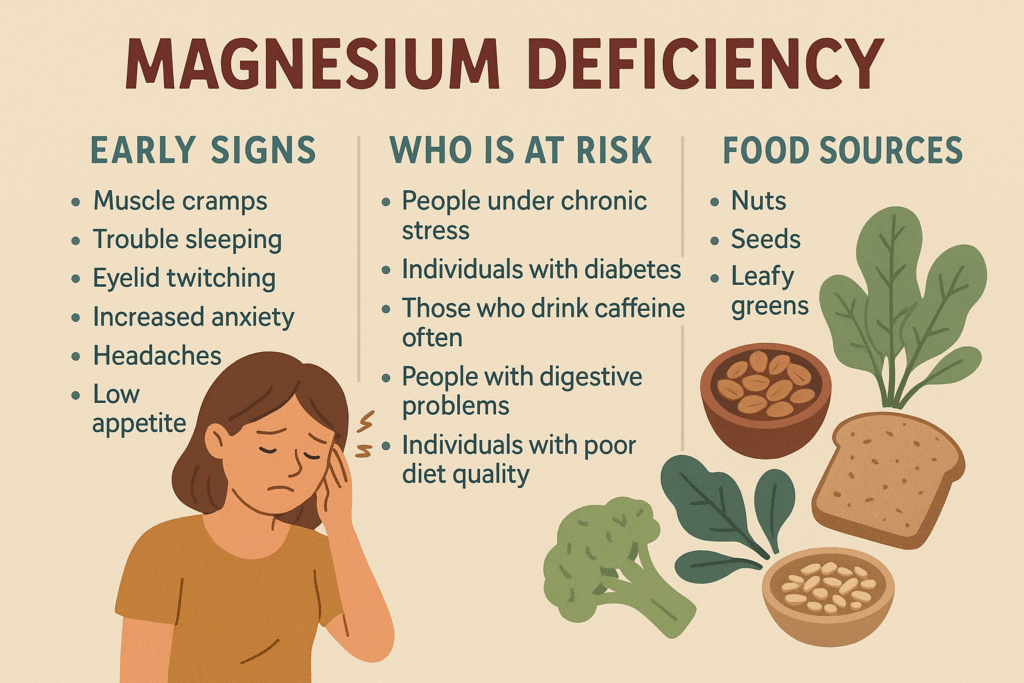
Magnesium supports muscle function, sleep quality and stress control. Stress and poor diet can quickly reduce magnesium levels.
Early Signs
- Muscle cramps
- Trouble sleeping
- Eyelid twitching
- Increased anxiety
- Headaches
- Low appetite
Who Is at Risk
- People under chronic stress
- Individuals with diabetes
- Those who drink caffeine often
- People with digestive problems
- Individuals with poor diet quality
Food Sources
- Nuts
- Seeds
- Leafy greens
- Whole grains
- Dark chocolate
When to Test
Magnesium is sometimes difficult to detect in standard tests, so symptoms and diet play a big role in identifying it.
How Deficiencies Affect Mood, Weight and Immunity
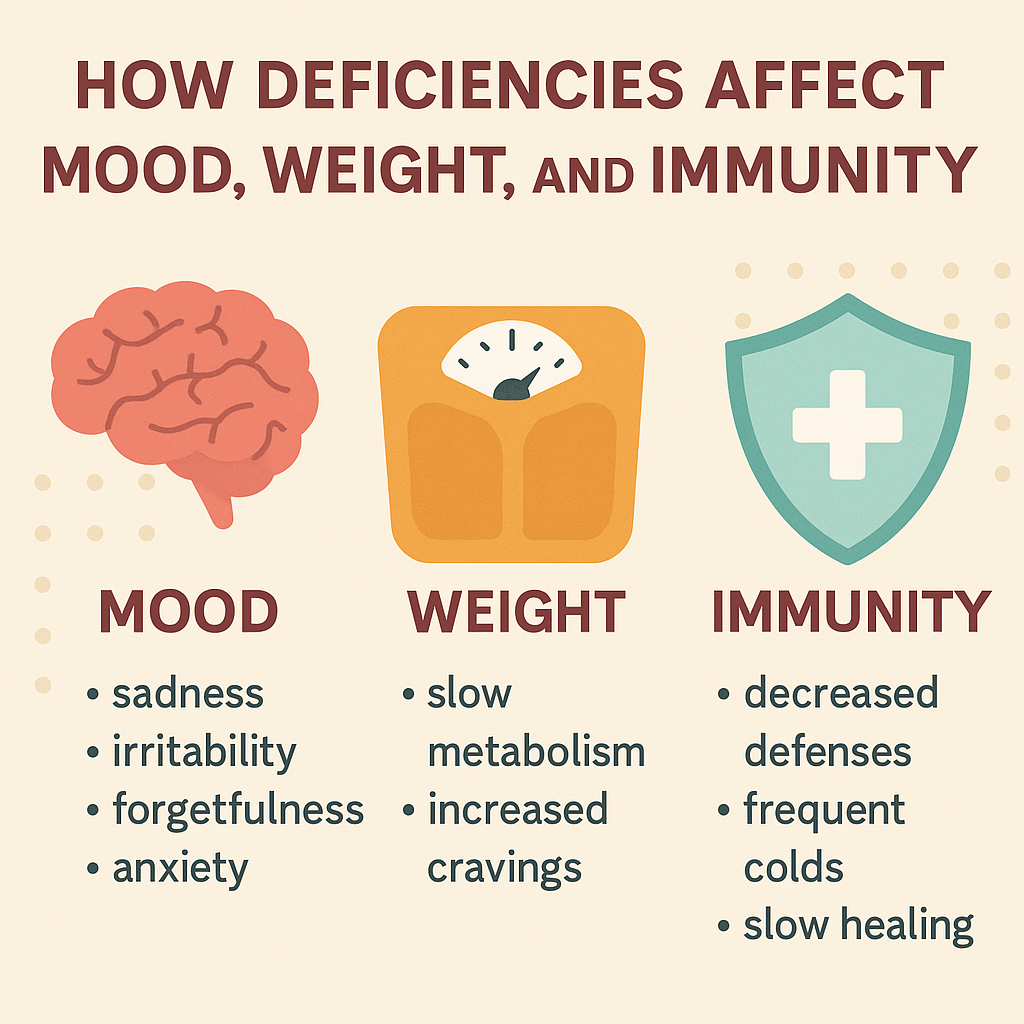
Nutrients influence how you think, feel and move. Even mild deficiencies can cause noticeable changes.
Mood
Low B12 and vitamin D can cause
- sadness
- irritability
- forgetfulness
- anxiety
Magnesium plays a role in stress control, so low levels can make you feel overwhelmed more easily.
Weight
Low nutrient levels can slow metabolism and increase cravings. For example
- Iron deficiency reduces exercise capacity
- Magnesium deficiency affects blood sugar control
- This makes it harder to maintain a steady weight.
Immunity
Vitamin D and iron help your immune system fight infections. Low levels increase the risk of frequent colds, slow healing and repeated illnesses.
When You Should Consider Testing
You should consider checking your levels if you have
- long term fatigue
- hair loss
- low mood
- frequent infections
- difficulty concentrating
- restless sleep
- muscle pains
- A simple blood test can reveal what your body needs.
Takeaway
Nutrient deficiencies rarely shout. They whisper through symptoms like tiredness, poor focus and changes in mood. By learning these early signs, you can protect your long term health and take small steps toward better energy and better balance.