Talking about gut health can feel uncomfortable, but it is one of the most important parts of overall wellbeing. Your gut affects your energy, your mood, your immunity and even the clarity of your skin. One of the easiest ways to understand what is happening inside your digestive system is by paying attention to your stool. It may seem strange at first, but it can reveal a lot about how well your gut is working.
This guide explains gut bacteria, bowel movement patterns, early signs that your gut needs help and the foods that support smoother digestion.
Understanding Your Gut Bacteria
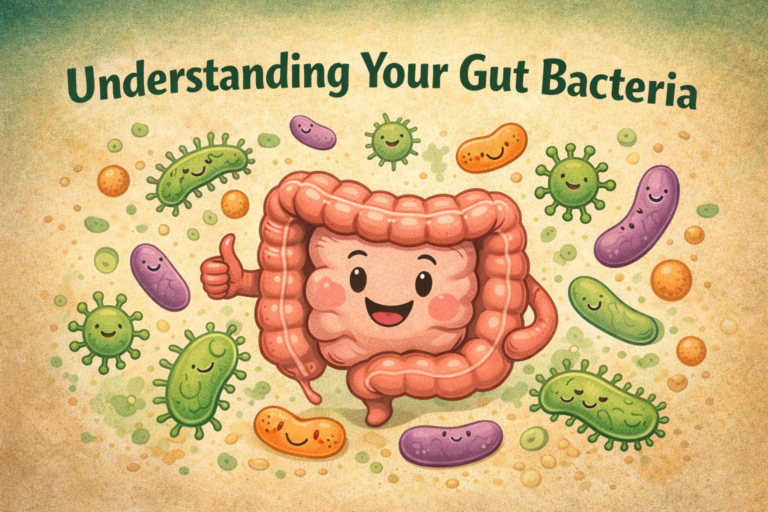
Your intestines contain trillions of bacteria that help you break down food, absorb nutrients and protect your body from harmful invaders. When these bacteria are balanced, digestion feels smooth. When they are disrupted, you may experience bloating, irregular bowel movements, cravings and low mood.
Why gut bacteria matter
- They help break down fibre
- They support vitamin production
- They keep harmful bacteria under control
- They affect your immunity
- They influence your mood through the gut brain connection
A healthy gut microbiome feels gentle and stable. An imbalanced one often feels loud and unpredictable.
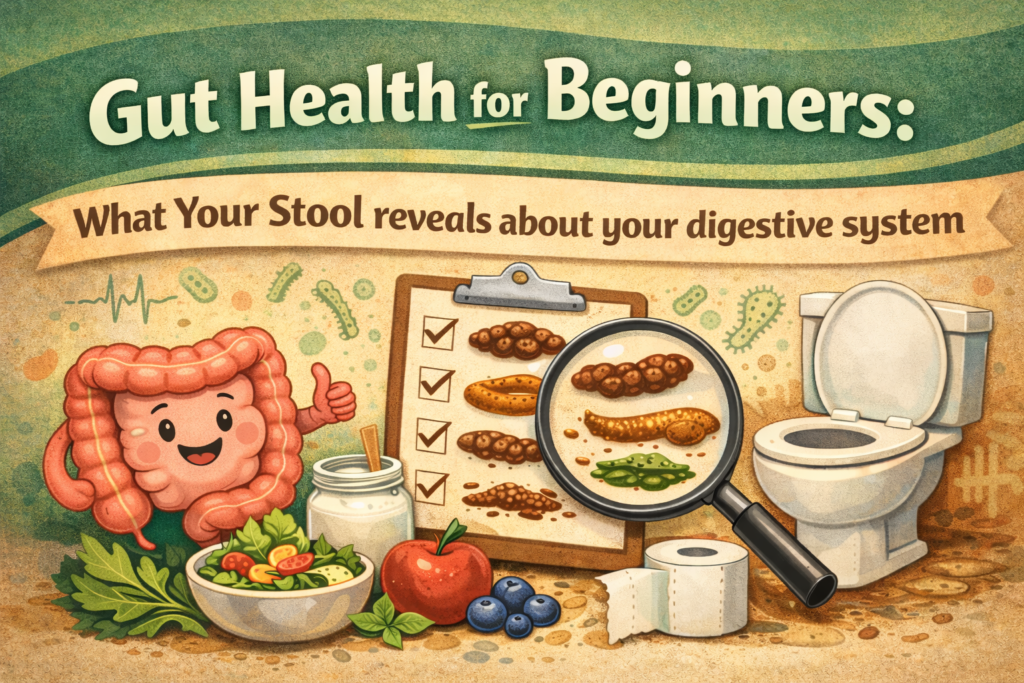
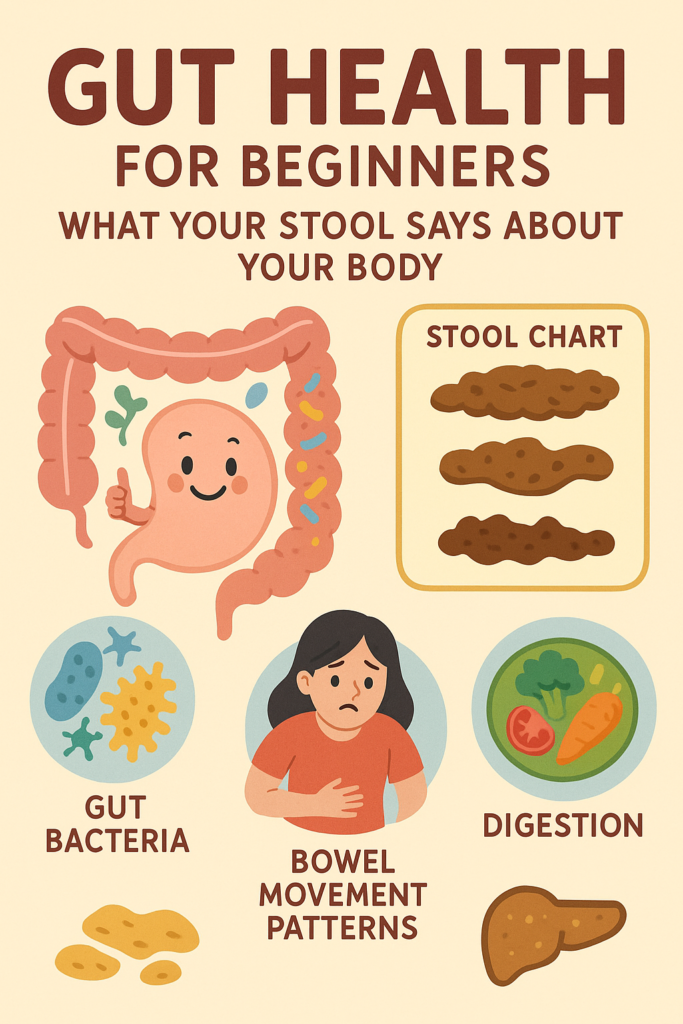
What Your Stool Says About Your Health
Your stool gives clues about digestion, hydration and overall gut function. Here is what different patterns can mean.
Healthy stool
A healthy bowel movement is usually
- medium brown
- easy to pass
- shaped like a soft log
- comfortable with no strain
- happens one to three times a day
This shows your gut bacteria are balanced and your diet contains enough fibre and water.
Signs your gut needs attention
- Hard, dry stool that is difficult to pass
- Very loose or watery stool
- Stool that floats often
- Pale or clay coloured stool
- Strong foul smell
- Unusual colours unrelated to food
- Going many days without a bowel movement
- Rushed diarrhea after meals
These patterns can be linked to diet, stress, poor hydration, infections or imbalanced gut bacteria.
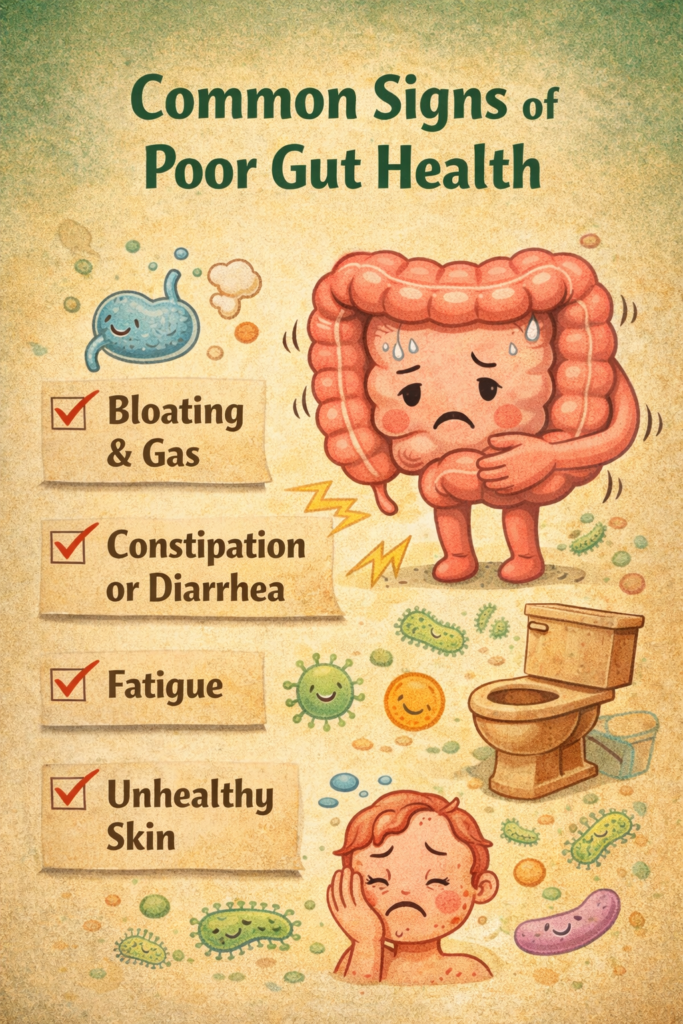
Common Signs of Poor Gut Health
You do not always see the problem in your stool alone. Your body may show other signs.
Digestive symptoms
- Bloating after meals
- Excessive gas
- Constipation
- Diarrhea
- Stomach cramps
- Heartburn
Non digestive symptoms
- Low energy
- Mood changes
- Trouble focusing
- Inflammation
- Skin breakouts
- Frequent illnesses
Your gut has a direct relationship with your brain and immune system, so imbalances can show up in surprising ways.
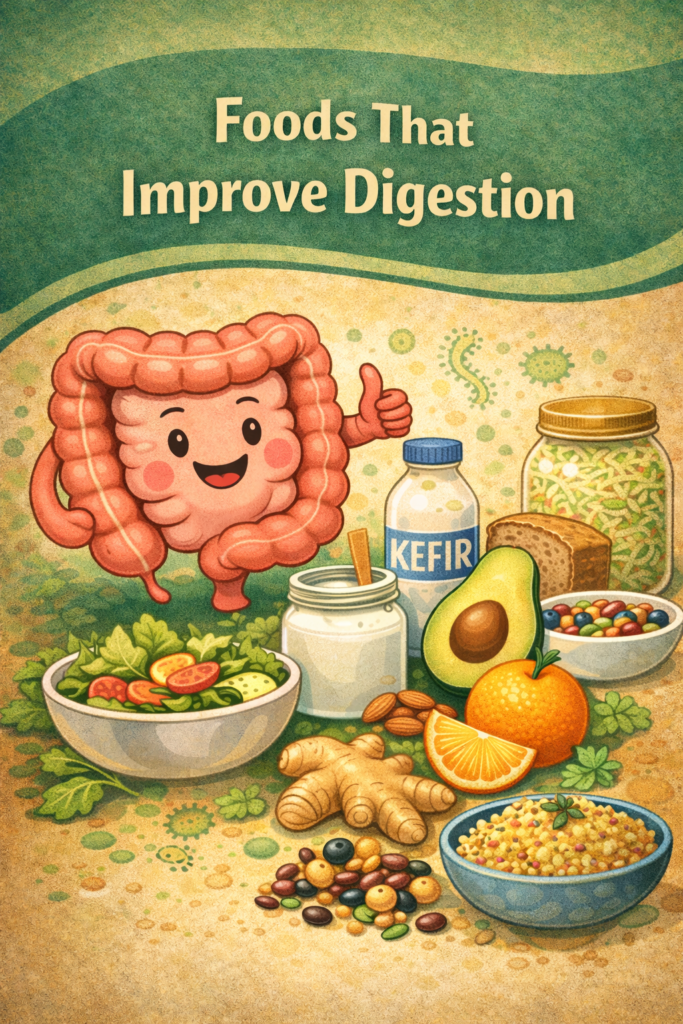
Foods That Improve Digestion
What you eat can either support or strain your gut. Choosing the right foods can bring balance back to your digestive system.Fibre rich foods
- Whole grains
- Lentils and beans
- Berries
- Apples
- Broccoli and leafy greens
Fibre keeps your bowel movements regular and feeds your healthy gut bacteria.
Fermented foods
- Yogurt
- Kefir
- Kimchi
- Sauerkraut
- Kombucha
These foods add beneficial bacteria that improve gut balance.
Hydration
Water keeps your stool soft and helps everything move smoothly.
Healthy fats
- Avocados
- Nuts
- Seeds
- Olive oil
These fats support the lining of the gut and improve stool consistency.
Foods to limit if your gut feels sensitive
- Highly processed snacks
- Excess sugar
- Fried foods
- Too much caffeine
- Alcohol
These can irritate the gut and disrupt the balance of bacteria.
Takeaway
Your gut speaks through your digestion, your energy and even your stool patterns. Once you learn how to read these signs, it becomes easier to understand what your body needs. With more fibre, more hydration, better sleep and regular meals, most people notice a clear improvement in bloating, mood and overall comfort.